
Jesus Did Not Have Two Uniforms
John Morgan was born in Dublin, Ireland in the early 1800s. He became a missionary with the Church Mission Society, CMS[1] in 1931, and arrived in New Zealand in 1933 after about half a year of travel by sea.
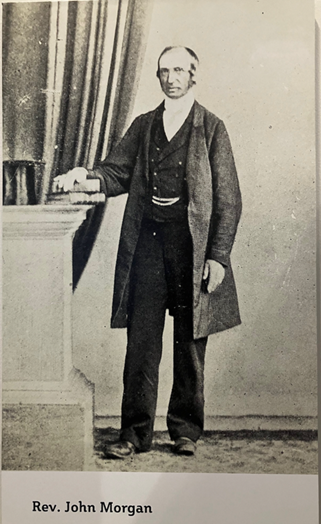
I came across his picture and story at a museum in New Zealand on a visit in April 2026. It depicted a mixed legacy of the British coming to a country inhabited by the Māori people.
John wanted the Māori communities to flourish, which included spiritual, social and economic welfare. So as a “traditional missionary” he started a church and a school. But he went beyond that: he also started businesses and created infrastructure that would accommodates the growth of the companies, which could be instrumental to the holistic transformation of society.[2] He also believed that flourishing communities through trade could stop intertribal warfare.[3]
But not everyone understood or appreciated his holistic approach, including fellow believers and missionary colleagues.
“Not everyone liked the Reverend John Morgan. The Church Missionary Society wondered if he might be doing too much for the everyday lives of Maaori and not enough towards their spiritual conversion to Christianity. Morgan helped Maaori to thrive in global industries.”
What lessons can we learn? Well, there is nothing new under the sun. The sacred–secular divide was real even back then. But equally true: There were people—like John Morgan—who believed that the gospel has the power to transform people and societies holistically. So, he did business with a godly mission.
In that regard, John Morgan was doing ministry like Jesus. Jesus never ever told anyone: “You have the wrong kind of need.” And most people who came to Him came with physical needs, and issues related to grief and sorrows, legal complexities, and money matters. Nicodemus was an exception, an intellectual who came with spiritual questions. Jesus responded to all the needs, and said it was the Kingdom of God being manifested.
Jesus never had two uniforms, as it were. One when He was preaching, and another one when He was doing social work. No, for Jesus it was a package deal. Preaching, manifesting and extending the Kingdom of God was an outflow of an undivided divine love.
We mustn’t have two personas: a spiritual ministry person, and a business and investing persona. No, it should be an integrated whole. Not acted out or displayed in different uniforms. Nor should donations be considered spiritual, and investments secular.
God wants people, and different sectors of society to flourish holistically, and it seems like John Morgan had caught that vision.
What else can we learn? Well, some missionaries can do transformational business. And in doing so, they are following in the footsteps of Jesus. So, do not overlook entrepreneurs and business builders with links to mission agencies. They can also do business for God and people.
[1] CMS was founded 1799 by leaders of the Clapham group, including William Wilberforce. They believed in the propagation of the Gospel to the ends of the earth, but also in societal transformation. That’s why they also fought to end slavery and the slave trade. From the early 2000 I was the “BAM Consultant” to CMS, and some of its leaders around the world, including CMS in New Zealand.
[2] “Morgan introduced wheat and other crops, and agricultural machinery and flour mills. Māori agriculture flourished. By the 1850s Ōtāwhao was a showpiece of rural 'civilisation', with its church, its hundreds of acres of wheatfields, vegetable gardens, orchards, mills, and its roads plied by oxen and carts laden with produce for sale in Auckland. Morgan also helped lay out bridle tracks and organise mail delivery from Auckland to Napier and New Plymouth via Ōtāwhao, where he became postmaster. He established a boarding school for Māori children.” Slightly edited excerpts from ‘Dictionary of New Zealand Biography: Morgan, John’
[3] An idea similar to Adenauer’s and Schuman’s belief which underpinned their initiative which eventually became the European Union – peace through trade.